The Rolling Pin That Outlived Three Kitchens: Why We Can't Let Go of Worn-Out Tools
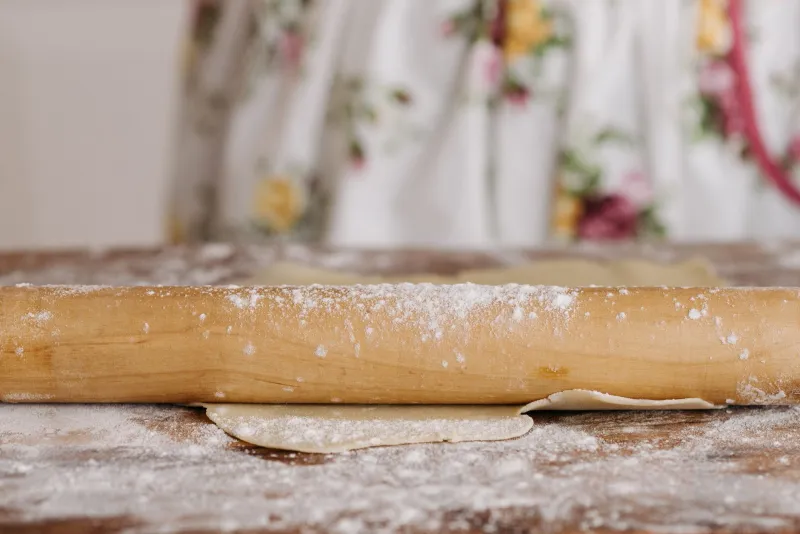
My Aunt Dottie's rolling pin is not a beautiful object. The handles are darkened with sixty years of palm oil, one end has a faint scorch mark nobody will explain, and the wood has been worn so smooth in the middle that it dips like a riverbed. It came to me in a grocery sack of my grandmother's things, wedged between a hand-crank egg beater and a set of measuring spoons fused together at the ring.
I own three modern rolling pins. I use that one.
If you've spent any time in a family kitchen, you already know why. There's a particular kind of object that stops being equipment and starts being a relative — and once that happens, no amount of silicone-and-marble upgrading can talk you out of it.
The Objects That Won't Retire
Every family seems to have one. Ask around and they surface fast: a mixing bowl with a chip on the rim that's been there since Nixon, a wooden spoon worn concave on one side, a spatula so old the heat has warped it into a permanent lean. They're not antiques in any respectable sense. Most of them cost less than a dollar when they were new. And yet try throwing one away and watch what happens to the room's temperature.
I started asking people about their inherited tools — at potlucks, in comment sections, over my neighbor's fence — and the pattern was immediate. Nobody described the tool's function first. They described the person.
"It was her pie pin," a woman in Ohio told me, correcting herself before I could. "I mean, her rolling pin. But that's what we called it, because it only came out for pie."
A man in Georgia swears his mother's cast iron skillet makes cornbread the way no other pan can, and he's not entirely wrong. A well-seasoned skillet is a living archive — decades of fat baked into the surface, layer by layer, like sediment. You can't replicate that in a brand-new pan, no matter what the box says. The seasoning is the history.
What the Tool Knows That the Card Doesn't
We talk a lot on this site about recipe cards — the handwriting, the grease spots, the instructions that trail off into "bake until done." But a recipe card, even a beloved one, is a set of instructions. A tool is a set of habits, fossilized.
Think about what a worn tool actually encodes. The dip in that rolling pin? That's where her hands rested, every session, year after year. The stain line inside the mixing bowl marks exactly how high she filled it with flour. The spoon worn thin on one side tells you she stirred with her right hand and dragged the bowl toward her, and that she scraped hard because waste was a sin in her house.
A tool is a technique you can hold. When you pick it up, your hands fall into the grooves — sometimes literally — of someone else's practice. You grip the pin where she gripped it. You feel the same resistance in the dough. It's the closest thing we have to standing next to them again.
And that's why, for a lot of families, the recipe only tastes right with the original equipment. It's not magic. It's muscle memory, transferred through an object. The tool doesn't just help you make the dish — it teaches your hands how.
The Arguments We Have Over Frying Pans
Inherited tools also cause trouble, which might be the most human part of the whole story. I heard about sisters who hadn't spoken in two years over the division of their mother's kitchen — not the house, mind you, the kitchen. The skillet went to the youngest. The older sister is still not over it.
Another family told me about their father's gravy spoon, which one brother keeps in a drawer and one brother wants "in rotation, where it belongs." They've reached a custody compromise involving holidays.
It sounds absurd until you think about what's actually being divided. Nobody fights over a $6 spatula. They fight over access to the person. The object is just the last place the person still lives.
Use It, Don't Shrine It
Here's my one piece of advice, and I'll admit I don't always follow it myself: the worst thing you can do with an inherited tool is put it on a high shelf and never touch it.
A tool kept in service keeps accumulating story. The pin I use will someday pass to my niece with my dip worn into it, alongside her great-aunt's. A tool kept behind glass just stops — a museum piece with no docent. The whole point of these objects is that they were made to be worked. Wood wants hands. Iron wants heat.
So this week, pull the inherited thing out of the back of the cabinet. Make the recipe it belongs to. Your grandmother's pie crust, your father's Sunday gravy, whatever it is. Use the dented bowl. Feel where the handles have been shaped by somebody who isn't you.
It won't taste exactly like it did at her table. It's not supposed to. But it'll taste closer than anything else you could cook — and someday, when the pin is in someone else's hands, it'll be your grip they're falling into.
Do you have a kitchen tool you inherited that you can't part with? We'd love to hear the story — and the recipe that goes with it — in the comments.