When the Gumbo Pot Moved to Minnesota: What Happens to a Recipe After Relocation
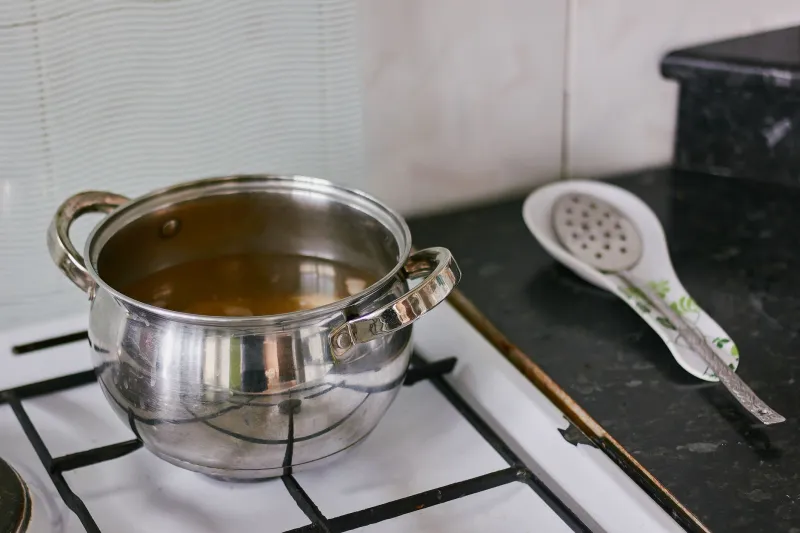
When Denise Broussard packed up her Lafayette, Louisiana kitchen for St. Paul, Minnesota, the moving company catalogued the furniture, the boxes, the bicycles. Nobody wrote down the most important cargo: a dark roux, a bag of Gulf shrimp she'd pay double for up north, and forty years of muscle memory in her wrists.
"The first winter, I made gumbo when it hit minus ten," she told me over the phone, the sound of a stockpot simmering behind her voice. "My neighbors thought I'd lost my mind. Then they smelled it. Now they show up with their own containers."
Denise isn't alone. America is a country of movers — roughly one in ten households changes address every year — and tucked into every U-Haul is a recipe that's about to become an expatriate. What happens to a dish when it leaves home is one of the quiet dramas of American cooking.
The Ingredients Don't Cooperate
The first thing that changes is the shopping list. Denise learned within a month that the andouille in Minnesota is a polite imitation, that Gulf shrimp arrive frozen and tired, and that her beloved file powder required a specialty order.
So she adapted. Chicken thighs instead of some of the shrimp. A smokier sausage she found at a butcher shop in Frogtown. The roux, though? The roux stayed sacred.
"You can substitute a lot," she says. "But if somebody from home tastes my roux and it's rushed, they'll know. That's the part I refuse to negotiate."
Every transplanted cook I spoke with drew a similar line. There's a fixed point in each heirloom recipe — the thing that makes it theirs — and everything else is negotiable. For a Texan named Marisol, it's the masa in her grandmother's tamales, sourced from a specific San Antonio mill and now ordered online in bulk. For an Ohioan living in Portland, it's the exact ratio of cream of mushroom soup in the hotdish, a casserole that raises eyebrows in a city of foraged greens until people taste it.
When the New Neighbors Get Curious
Something unexpected happens when a regional dish lands somewhere it doesn't belong: it becomes an ambassador.
Marisol's tamaladas — the assembly-line parties where a dozen people spread masa and fold husks — have become a December tradition in her Portland cul-de-sac, drawing in neighbors who'd never made a tamale in their lives. "My grandmother would be shocked to see a guy from Wisconsin rolling tamales," she laughs. "But she'd also be tickled. That's how you get invited into a family. You hand them something to do with their hands."
This is the second life of a migrated recipe. It stops being just dinner and becomes a demonstration, a story you can taste. The cook who's far from home often gets more evangelical about the dish, not less — because cooking it is the cheapest plane ticket available.
What Gets Lost, and What Gets Stronger
Not everything survives the move intact. Recipes that depended on community — the church potluck, the fishing crew, the neighbor with the fig tree — lose their context. A crawfish boil in Colorado is a production; in Acadiana it was a Tuesday.
But there's a flip side. Distance clarifies. Cooks who never wrote anything down suddenly find themselves measuring, photographing, documenting — because the person they'd someday teach is 1,200 miles away. Denise's daughter lives in Seattle, and last year Denise finally wrote the gumbo down, step by step, for the first time in the family's history.
"I hated doing it," she admits. "It felt like explaining a joke. But then she sent me a photo of her first pot, and I cried like a fool."
The Dish Becomes the Address
Here's what I keep coming back to: in a country where families scatter, the recipe is the reunion. It doesn't matter whether you're eating gumbo in a Minneapolis kitchen or a Houston break room — when it's made right, everyone at the table is temporarily in the same place.
Denise put it better than I can. "People ask if my gumbo is authentic. I tell them it's Louisiana in a pot, and I'm not in Louisiana. But the pot came with me, and so did the know-how. That's home enough."
So if you've carried a dish across state lines — the hotdish to Texas, the gumbo to Minnesota, the pierogi to Arizona — you're not just cooking. You're holding up your end of a very old arrangement: the food travels, so the family doesn't have to.
What recipe moved with you? Tell us in the comments — we're collecting migration stories, one pot at a time.