Bought for Three Dollars: What Happens When a Stranger Inherits Your Grandmother's Recipe Box
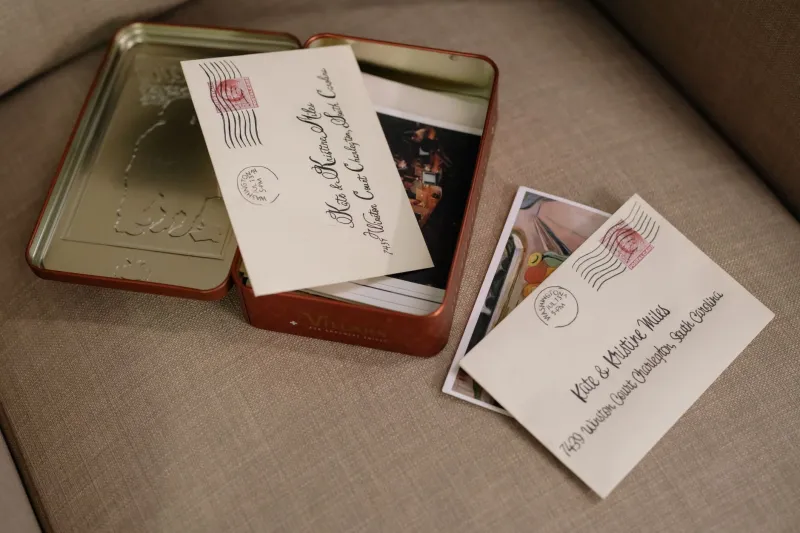
The box sat on a folding table between a bread machine still in its box and a set of drink coasters nobody wanted. Three dollars, handwritten on a strip of masking tape. Inside were forty years of a woman named Eleanor's cooking — her mother's kolaches, a neighbor's divinity fudge, a casserole labeled only 'for after the funeral.'
Maggie Reyes bought it without hesitation. She's one of a growing number of collectors who haunt estate sales, flea markets, and church rummage shops specifically looking for what most shoppers walk past: handwritten recipe cards, spiral-bound community cookbooks, and the occasional shoebox of clippings held together with a rubber band.
"People think it's strange," Reyes told me over the phone from her home in Ohio. "You're paying three dollars for somebody's whole life in the kitchen. But if I don't take it home, it's probably in a dumpster by Tuesday."
The Boxes Have to Go Somewhere
There's a hard truth at the center of every estate sale: the next of kin can't keep everything. When a house full of seventy or eighty years of living gets cleared out in a weekend, the things with obvious monetary value get claimed fast. The recipe box, the handwritten notes, the church cookbook with a name inked inside the cover — those end up in the "everything a dollar" bin, or boxed for donation, or hauled to the curb.
Reyes has found cards tucked inside the pages of cookbooks, behind refrigerator magnets sold with the fridge, and once, folded into a sewing kit. "Whoever wrote that one down must have needed it in a hurry," she said. "You could tell it was written during the actual phone call. The handwriting gets faster at the bottom."
That's the detail that hooks most collectors — not the recipes themselves, which are often standard midcentury fare, but the evidence of the person. A smudge of grease. A note in the margin: Halve this, Dad thought it was too sweet. A card from 1962 with a return address from a neighbor three doors down.
Cooking Someone Else's Memories
For Reyes, buying the box is only step one. She cooks from the cards.
Not all of them — some call for ingredients that don't exist anymore, and a few are so incomplete they're more riddle than recipe. But she makes what she can, photographing each dish and logging her notes in a binder she keeps alongside the originals.
"The first thing I ever made from a rescued box was a hot milk cake from a lady in Pennsylvania," she said. "It was fine. Honestly, kind of dry. But I stood in my kitchen eating it and cried anyway, because you could tell by the wear on that card that it was the thing she was known for. It was her card. Everybody gets one."
Other collectors go further than the kitchen. Online groups dedicated to "recipe box rescue" have thousands of members, and a surprising amount of the activity isn't about cooking at all. It's detective work.
Names on cards get run through genealogy databases. Addresses get plugged into property records. Obituaries get searched. The goal, for a dedicated few, is to find the descendants — the grandchildren who maybe didn't know the box existed, or worse, watched it get sold off during the worst week of their lives.
The Reunion
When it works, it lands hard.
A collector in Kansas traced a recipe box back to a granddaughter in Texas and mailed it to her with a note explaining where it had turned up. The granddaughter posted about it in a local Facebook group, and the story made the rounds: her grandmother's handwriting, back in the family, saved by a stranger for the price of a fast-food lunch.
These reunions raise a question that doesn't have a clean answer: who owns a family's culinary memory? Legally, the box was sold fair and square. Emotionally, it never belonged to anyone but the family — and the collectors know it. That's why most of them describe themselves as caretakers, not owners. They hold the boxes, cook from them, learn from them, and stay ready to let go if a descendant ever turns up.
"I tell people I'm the foster home," Reyes said. "Not the forever home."
What the Cards Leave Behind
There's a quieter payoff too, one that has nothing to do with returning anything. Rescued recipe boxes are accidental archives — records of how ordinary American households actually ate, in handwriting, with all the shortcuts and church-supper politics intact.
You learn that gelatin was everywhere. That neighbors traded recipes like currency. That someone in nearly every family kept a card for a dish they made exactly once — a wedding cake, a tamale experiment, something labeled "Eleanor's try at Ruth's." The boxes record generosity. Every third card, in almost every box, came from somebody else.
That might be the real reason the collectors keep at it. A recipe card written in a grandmother's hand isn't instructions. It's proof that she fed people, that people trusted her cooking enough to ask for it, that somebody thought her kolaches were worth preserving on an index card for the next fifty years.
Three dollars is a small price for that. Somebody has to do it — because the alternative is that Eleanor's handwriting, and Ruth's, and everyone's, ends up in a landfill instead of a kitchen where somebody still makes the cake and thinks about her.
Have a rescued recipe box of your own, or a family box that got away? We'd love to hear the story — the comments are open, and so is our inbox.