Press Record Before You Preheat: The Case for an Audio Cookbook
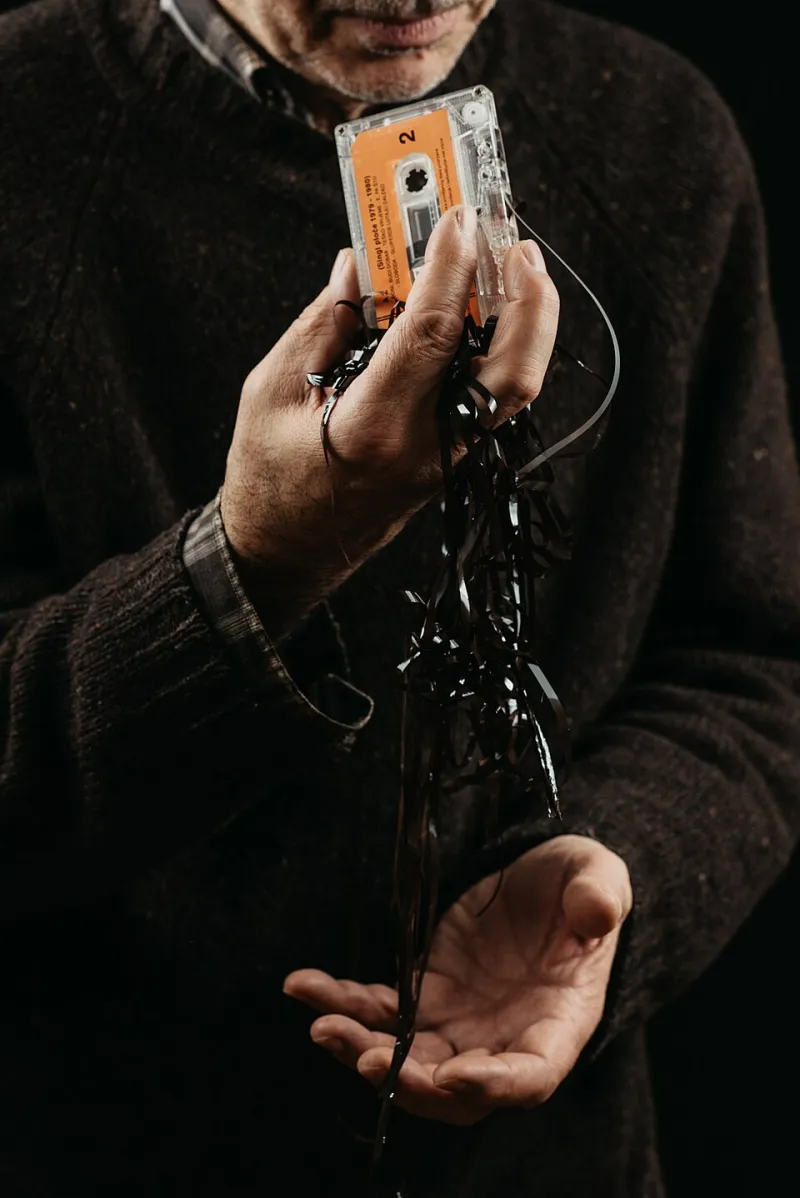
Photo: Shixart1985, CC BY 2.0, via Wikimedia Commons
The Tape I Can't Throw Away
In my aunt's basement, in a box labeled Christmas lights — maybe, there's a cassette of my grandmother describing how she made her chicken and dumplings. She never wrote it down. She just talked, the way she cooked — loosely, warmly, with a spoon in her hand and a story wedged between the steps.
"You take a good handful of flour, maybe two if the day's damp," she says, and you can hear her actually measuring with her hands as she talks. You can hear a pot lid clatter. You can hear my uncle holler something from the other room and her laugh and lose her place.
That recording is the only version of that recipe that exists. And honestly? It's the best one.
The Trend That's Really a Return
Families across the country are quietly doing what mine did decades ago: pressing record in the kitchen. Some are using the voice memo app on their phone; others have dug old cassette recorders out of attics for the occasion. Vintage reels of relatives dictating recipes — once a novelty found on estate-sale tapes — have become a kind of treasure, and people are realizing you don't have to wait for a reel to surface to make one.
It makes sense. We've spent years photographing recipe cards and scanning handwritten pages, and those are wonderful. But a card can't tell you how the dough should feel. It can't laugh at its own joke halfway through the instructions. Voice carries the parts of a recipe that never made it to paper — the rhythm, the hesitations, the little asides like "your grandfather hated onions, so I always went light."
If our site's name means anything, it means this: the kitchen is where memories live, and some of them only exist out loud.
How to Actually Do It
You don't need equipment or a plan worthy of a podcast. You need a phone, an afternoon, and a relative willing to talk while they cook. Here's what's worked for us.
Cook alongside them. Don't interview from across the table. Set up your phone on the counter (propped against the flour canister works fine) and let them make the dish while you ask questions. Recipes come out of people's hands more easily than their heads.
Ask about the senses, not the numbers. The magic questions:
- "How do you know when it's done?"
- "What does it smell like right before that?"
- "Show me what a handful looks like."
- "What would you do differently if it was a cold day?"
- "Who taught you this one?"
That last one might matter more than any measurement. Heirloom recipes are really heirloom lineages, and the recording captures the chain.
Translate 'a handful' out loud. When they say a handful, ask them to scoop it into a measuring cup so you can note it later — but don't stop them from saying handful on the tape. Both versions belong together: the exact amount for the beginner, the feel of it for the soul of the dish.
Let the silences happen. Some of the best moments on my grandmother's tape are pauses — her humming, the radio low in the background, a long stretch where she's just stirring. Resist the urge to fill dead air. You're not producing content; you're preserving a person.
Ask the closing question. "If someone made this fifty years from now, what would you want them to know?" Every family I've heard do this has gotten something worth keeping on that answer alone.
What You'll End Up With
Here's the thing nobody tells you: the recording becomes the heirloom, and the recipe becomes almost secondary.
My cousin transcribed our grandmother's dumpling tape into a neat written recipe, and it's useful — we consult it every Thanksgiving. But the tape is what gets passed around. Her voice saying "don't overwork it, honey, the dumplings know when you're nervous" has done more for our family's cooking than any measurement ever could. The written version tells you what. The recording tells you who.
There's also a gentle urgency here. Voices change. Memories soften around the edges — a pinch becomes a teaspoon becomes "I don't rightly remember." Every year we wait is a year of details that drift. Making an audio cookbook isn't a morbid exercise; it's a joyful one. Most relatives light up when you hand them the mic. Somebody finally wants to hear about the pot roast.
Start With One Dish
Don't try to archive the whole repertoire in a sitting. Pick one dish — the one they're famous for, the one requested at every reunion — and record that. One good recording becomes two, becomes a folder, becomes something your kids will play for their kids.
This year, before the holiday cooking starts, do one thing: prop your phone against the flour canister, press record, and ask, "Okay — how do you really make it?"
The recipe card can wait. The voice shouldn't have to.