The Dressing Was Never the Point: Untangling Heirloom Recipe Claims
The recipe tin was not valuable. It was a dented metal box with a rooster on the lid, the kind you might buy for eight dollars at a flea market. But after my aunt's funeral, four adults stood in her kitchen and talked about it like it was a lake house. Who had it last? Who had been promised it? And who, exactly, was going to make the dressing now?
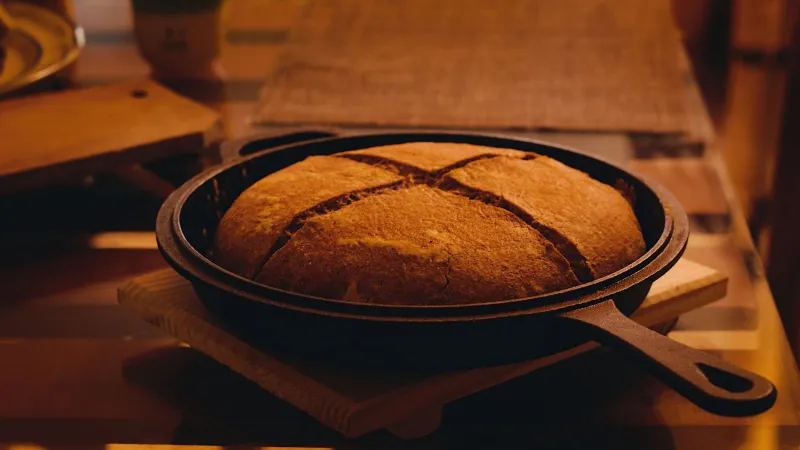
That was the first time I understood that heirloom recipes are rarely just about food. They are about belonging. A handwritten card is a piece of a person's hand. A cast-iron skillet holds decades of seasoning and every pancake ever flipped in it. The holiday dressing — the one with the right amount of sage and the wrong amount of patience — is not a side dish. It is a job title.
The Question After the Funeral
In the first weeks after a death, families are often asked to make decisions while they are still tired, raw, and operating on casseroles. Someone needs to clear the refrigerator. Someone needs to choose the readings. And someone, eventually, looks at the recipe box and asks a question that sounds small: Can I have this?
It is not a small question. It is a question about who gets to be the keeper. Who gets to stand at the stove on Thanksgiving and say, This is how she did it. Who gets to be trusted with the original card, the one with the grease spot in the corner and the note in the margin that says not too much broth.
The trouble is that most families never say any of this out loud. Grandma did not leave a memo. The will may list the house, the car, and the bank accounts, but it rarely says anything about a stained index card or the skillet that has been on the same burner since 1978. A will can list tangible personal property, but most of us never get that specific about a recipe card. That leaves the rest of us to negotiate with old sibling dynamics, fresh grief, and a lifetime of small resentments that suddenly have a stage.
Why a Recipe Card Starts a Fight
A recipe card is a proxy. It stands in for the person who wrote it, the kitchen where it was used, and the version of the family that existed when that kitchen was busy. When someone asks for the card, they may actually be asking for recognition. They may be saying, I was close to her. They may be saying, I am the one who still cooks. They may be saying, Please do not let this part of our family disappear.
That is why the fights get so fierce. Nobody is really arguing about paper. They are arguing about who loved whom best, who was included, and who gets to decide what happens next. The skillet is not just iron. It is the Sunday breakfasts. The dressing is not just bread and celery. It is the holiday table, and the person who carved the turkey, and the year everyone still came home.
The usual flashpoints are predictable. There is the handwritten card, often the only copy. There is the original cast-iron skillet, which may be worth less than the shipping cost to mail it and more than almost anything else in the house. There is the holiday assignment — the right to make the dressing, the rolls, the pie — which is an honor and a burden and a way of saying, You are still part of this. There are the church cookbooks with annotations, the rolling pin with a cracked handle, the good knife, the pot that is not good but is the one.
A Recipe Is Not a Deed
As the 2026 holidays approach, it is worth doing a little work before the next family gathering turns into a quiet audit of who deserves what. You do not need a lawyer to make this easier. You need a list, a phone call, and a willingness to say the awkward thing out loud while everyone is still around to answer.
Start with an inventory. Walk through the kitchen with the person who owns the recipes, if that is still possible, and name the things that matter. The recipe box. The skillet. The stand mixer. The hand-cranked grinder. The card with the pie crust. Do not assume everyone cares about the same objects. Ask. You may find that one sibling wants the card and another wants the pot, and neither wants the argument.
Then make copies. This sounds obvious, and it is still the most overlooked step. Photograph the cards. Scan them. Type them up. If the handwriting is hard to read, sit down with the person who can decode it and write the recipe out in full sentences. Include the parts that are not on the card: the oven temperature, the resting time, the way the dough should feel, the fact that the original recipe always needed five extra minutes. A recipe that lives only in one person's head is not an heirloom yet. It is a rumor.
Record the cook, too. A short video of the dressing being made is not a replacement for the card, but it is a different kind of inheritance. It captures the sound of the whisk, the look of the pan, the offhand comment about how her mother did it. Those details are often the first things to go.
Finally, decide who keeps what, and write it down. If an original is going to one person, say so clearly. If copies are going to everyone, say that too. If the skillet stays with the person who actually uses it, make peace with that on the front end. Shared custody of a cast-iron pan rarely works. A copy of the recipe can go everywhere. The original cannot. That is not unfair. It is just true.
What to Do When It Is Already Ugly
If the argument has already started, try to separate the object from the ritual. The card can be copied. The skillet can be shared or replaced. The dressing can be made by more than one person, even if that feels like a small betrayal of the original. The question is not how to divide a piece of paper. The question is how to keep the tradition from becoming a prize.
Ask the person who is upset what they actually want. Sometimes the answer is the card. Sometimes it is the right to host. Sometimes it is the feeling of being trusted. Once you know that, you can often find a solution that does not require anyone to lose. You can make a family recipe book with everyone's contributions. You can give the original to one person and a framed copy to another. You can trade off the holiday dish. You can agree that the point is to keep cooking, not to win.
Do It Before the Next Holiday
The recipe tin on my aunt's counter was not a legal document. It was a box of index cards, some of them written in pencil, some of them stained with butter, some of them with no title at all. But it held the family's working memory. It held the instructions for being together.
The best time to deal with that is before the funeral, before the diagnosis, before the next holiday when everyone is tired and hungry and pretending not to care. Pull out the cards. Make the copies. Ask the questions. Tell the stories while the person who lived them is still at the table. The dressing was never the point. The point is that someone should still know how to make it — and that everyone who loved the cook should be allowed to try.