Reading Between the Lines: My Grandmother's Recipe Cards Were Love Letters All Along
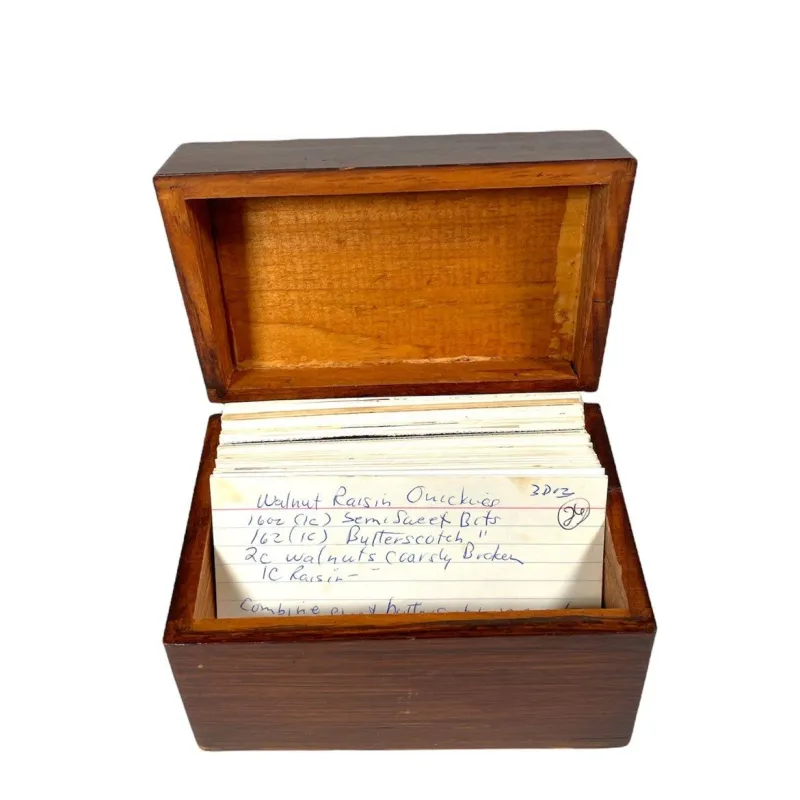
Photo: vintage handwritten recipe card box with old recipe cards, via i.pinimg.com
My grandmother's recipe box is a dented metal thing from the 1950s, the kind with a flip lid and a rusted clasp that fights you every time you open it. Inside, crammed between recipe cards for things like 'Salmon Loaf (don't tell Grandpa)' and a newspaper clipping for prune cake that's older than my mother, is a card labeled simply Lemon Icebox Cake.
I've made that cake a dozen times now, and every time, I learn something new about her. Not from the recipe itself—that's just graham crackers, sugar, eggs, lemon, and condensed milk, written in her careful schoolteacher's cursive. I learn from everything around the recipe.
The Margins Are the Real Recipe
Take the note in the top right corner: "use REAL butter — no substitutions!!" The double exclamation points tell me this was written after a period of her life when margarine snuck into the kitchen, probably during the war years or the budget-tight ones after. That one line is a whole chapter of American food history squeezed onto a 3x5 card.
Then there's the annotation next to the baking temperature: "Doris's oven runs hot — mine too after '78" — which means she was comparing ovens with my great-aunt Doris for at least forty years. These two women, forty miles apart in Ohio, calibrating their baking like scientists.
And at the bottom, in different ink: "For Bobby, double the crumbs, he only eats the bottom." Bobby was my father. He's in his seventies now and still, I am not making this up, eats only the graham cracker crust first.
Recipes as Family Records
Here's what I've come to believe: a recipe card is a diary that happens to be organized by ingredient. Historians and archivists have been saying this for years—community cookbooks and handwritten cards are some of the richest records we have of everyday American life, especially women's lives, which often went undocumented in official histories.
Look closely at your own family's cards and you'll find:
- Cross-outs and corrections that mark divorces, diets, doctor's orders, and changing times
- Rationing-era substitutions (mayonnaise in chocolate cake, anyone?) that never left
- Names attached to dishes — "Carolyn's potato salad" — that quietly memorialize people
- Grease stains and splatters on the steps that got made the most, a popularity ranking no algorithm could improve on
My grandmother's lemon icebox cake card has a stain right on the condensed milk line. Of course it does. That's the step you make with one hand while holding the can with the other.
Making Her Cake, Decades Later
The recipe itself is gloriously unfussy, the kind of no-bake dessert that got American families through summers before air conditioning was universal.
Grandma Ruth's Lemon Icebox Cake
- 1 ½ cups graham cracker crumbs
- ¼ cup sugar (melted butter to bind — "real butter," naturally)
- 2 eggs, separated
- 1 can sweetened condensed milk
- ½ cup fresh lemon juice
- Zest of one lemon (added by me, she'd have approved)
Press the crumbs mixed with melted butter and sugar into a dish and chill it. Beat the condensed milk with the egg yolks, then slowly add the lemon juice—it thickens almost magically. Fold in stiffly beaten egg whites, pour over the crust, and chill for at least four hours. Her note: "overnight is better, patience!!"
The raw-egg situation is the one place I've modernized—I use pasteurized eggs, and I like to think she'd roll her eyes and then do the same thing.
Pull Out Your Own Cards
This weekend, dig into that box or binder or accordion folder in your kitchen. Read the margins like you'd read a letter. Ask the relatives whose handwriting you find—while you still can—what the abbreviations mean, who Doris was, why the oven needed to cool.
Then, and this is the important part, write your own notes. Add the correction you discovered the hard way. Note who in your house picks out the onions. Someday, someone you love is going to hold that card, and those scribbles will be the conversation.
The recipe tells you how to feed people. The handwriting tells you why.